
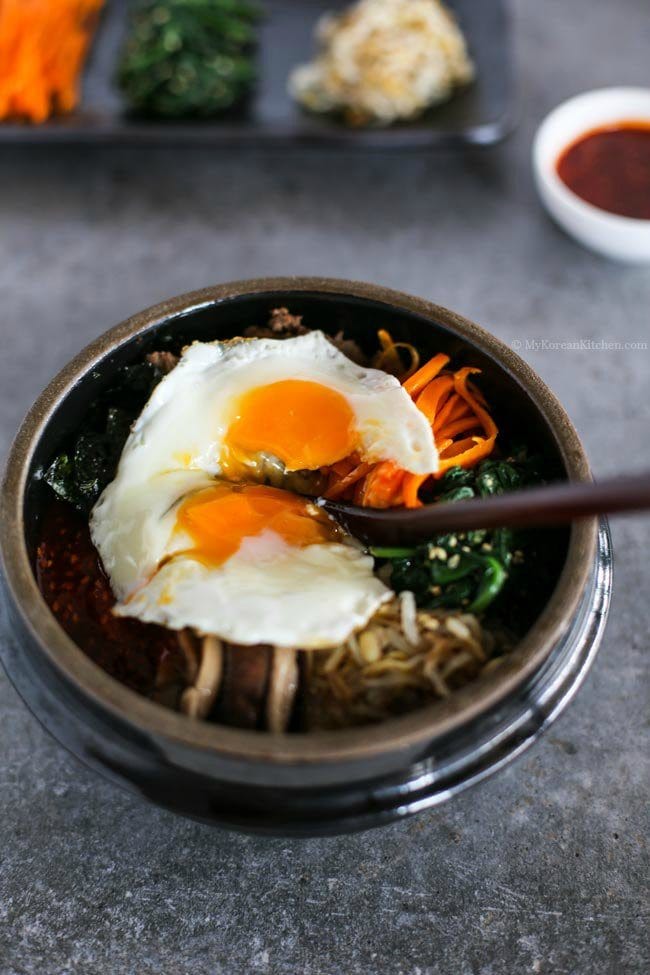
Bibimbap is a popular Korean dish that consists of a bowl of rice topped with a variety of mixed vegetables, meat, and a fried egg. The name “bibimbap” translates to “mixed rice” in Korean, which perfectly describes the dish. It is a nutritious and flavorful meal that can be enjoyed for lunch or dinner.
The vegetables used in bibimbap can vary, but some common ones include carrots, cucumbers, spinach, bean sprouts, and mushrooms. These vegetables are often sautéed or blanched to bring out their flavors and create a tender texture. The meat component can also differ, with options like beef, chicken, pork, or tofu. The protein is typically marinated and cooked before being added to the dish. The fried egg that tops bibimbap adds a rich and creamy element to the overall dish.
Ingredients of Bibimbap
The key ingredients in Bibimbap, a popular Korean dish, include:
- Rice: Bibimbap is traditionally made with short grain white rice, which is cooked and then mixed with other ingredients.
- Vegetables: Bibimbap is a mixed vegetable dish, and the choice of vegetables can vary. Common vegetables used in Bibimbap include carrots, spinach, bean sprouts, zucchini, and mushrooms.
- Protein: Bibimbap can be made with various types of protein, such as beef, chicken, pork, or tofu. The protein is usually marinated or seasoned with soy sauce, garlic, and other spices before being cooked.
- Sauce: Bibimbap is typically served with a spicy sauce called gochujang, which is made from red chili paste, soy sauce, sugar, garlic, and sesame oil. The sauce adds a distinctive flavor and heat to the dish.
Bibimbap is a versatile dish that can be customized to suit individual tastes and dietary preferences. The combination of rice, mixed vegetables, protein, and spicy sauce creates a flavorful and satisfying meal.
Step-by-Step Guide: Bibimbap (Korean Rice With Mixed Vegetables)
To prepare Bibimbap, you will need the following ingredients:
| Ingredients: | Quantity: |
|---|---|
| Cooked rice | 2 cups |
| Carrot, julienned | 1 |
| Zucchini, julienned | 1 |
| Spinach, blanched and seasoned | 2 cups |
| Bean sprouts, blanched and seasoned | 2 cups |
| Ground beef, marinated | 1/2 pound |
| Eggs | 4 |
| Soy sauce | 2 tablespoons |
| Sesame oil | 1 tablespoon |
| Gochujang (Korean red chili paste) | 2 tablespoons |
| Sesame seeds | 1 tablespoon |
| Vegetable oil | 2 tablespoons |
| Salt | To taste |
1. Begin by preparing the vegetables. Julienne the carrot and zucchini into thin matchstick-like strips. Blanch the spinach and bean sprouts in boiling water for a few seconds, then season with soy sauce and sesame oil. Set aside.
TIP: Blanching the vegetables helps to retain their bright colors and crisp textures.
2. Marinate the ground beef in a mixture of soy sauce, sesame oil, and minced garlic. Let it sit for at least 10 minutes to allow the flavors to infuse.
3. In a heated skillet, add vegetable oil and cook the marinated ground beef until browned and cooked through. Set aside.
Expert Tips for Making Bibimbap (Korean Rice With Mixed Vegetables)
When it comes to making Bibimbap, professional chefs have a few tips and tricks up their sleeves to ensure the flavors are perfectly balanced and the dish looks visually appealing. Here are some expert tips to help you master this delicious Korean rice dish:
-
Prep and cook each vegetable separately: To get the best texture and flavor from each vegetable, it’s important to cook them separately. This will help retain their individual flavors and prevent them from becoming mushy. Some vegetables, like carrots and mushrooms, can be quickly sautéed, while others, like spinach and bean sprouts, can be blanched.
-
Use high-quality Korean chili paste (gochujang): Gochujang is a key ingredient in Bibimbap and gives the dish its signature spicy and savory flavor. Make sure to use a high-quality gochujang for the best results. Look for brands that are made in Korea and have a deep red color. You can adjust the amount of gochujang based on your spice preference, but don’t skimp on it as it adds depth to the dish.
-
Arrange the toppings in an aesthetically pleasing way: Bibimbap is not only delicious but also visually stunning. Take the time to arrange the cooked vegetables and meat (if using) on top of the rice in an attractive pattern. You can use a round bowl to create a beautiful presentation or even arrange the ingredients in separate sections for a modern twist. Don’t forget to sprinkle some toasted sesame seeds and drizzle some sesame oil on top for added flavor and visual appeal.
By following these expert tips, you’ll be able to create a mouthwatering Bibimbap that not only tastes amazing but also looks like a work of art.
Reviews
I recently tried making Bibimbap at home using a recipe I found online, and it turned out delicious! Bibimbap is a popular Korean dish, and it consists of a bowl of rice topped with an assortment of mixed vegetables and sometimes meat or egg.
The recipe I followed included sautéing carrots, spinach, mushrooms, and bean sprouts separately and seasoning them with soy sauce and sesame oil. I also added some thinly sliced beef marinated in a soy sauce mixture. The colors and flavors of the vegetables were vibrant and fresh.
Once the vegetables and beef were cooked, I assembled the Bibimbap by placing the rice in a bowl and arranging the cooked vegetables and beef on top. I also topped it off with a fried egg and a sprinkle of sesame seeds.
The combination of flavors in this dish was amazing. The sautéed vegetables were tender and packed with flavor, and the marinated beef added a nice savory element. The runny yolk from the fried egg added a rich and creamy texture to each bite.
Overall, I was really pleased with how my homemade Bibimbap turned out. It was a fun and delicious way to explore Korean cuisine, and I will definitely be making it again in the future. If you’re looking to try a new and flavorful dish, I highly recommend giving Bibimbap a try!
I recently tried making Bibimbap at home and it turned out to be absolutely delicious! The combination of flavors and textures in this Korean rice dish is simply amazing.
The recipe was quite easy to follow and the ingredients were readily available. I loved how colorful the dish looked with all the mixed vegetables on top of the rice. It was like a beautiful work of art on my plate.
The key to a good Bibimbap is the sauce, and this recipe nailed it. The sauce had the perfect balance of sweet and savory flavors, and it really brought all the ingredients together. I couldn’t get enough of it!
Each bite was a perfect blend of the soft rice, crunchy vegetables, and tender meat. The flavors were bold and vibrant, and each ingredient added something special to the overall taste. It was a true explosion of flavors in my mouth.
I also appreciated how healthy this dish is. It’s packed with nutritious vegetables and lean protein, making it a great option for a wholesome meal. It felt good knowing that I was nourishing my body while indulging in something so delicious.
I highly recommend trying out this recipe if you’re a fan of Korean cuisine or just want to try something new. It’s a dish that will impress both your taste buds and your guests. Trust me, once you try Bibimbap, you’ll keep coming back for more!
I recently tried making Bibimbap (Korean Rice With Mixed Vegetables) for the first time, and it exceeded my expectations. The combination of flavors and textures in this dish is truly amazing.
The recipe was quite easy to follow, and I appreciated the fact that I could customize the vegetables to my liking. I opted for carrots, spinach, mushrooms, and bean sprouts, which added a vibrant mix of colors to the final presentation.
The process of preparing the various components of the dish was enjoyable. The vegetables were sautéed to perfection, the rice was cooked just right, and the fried egg on top added a lovely richness.
Once everything was ready, I assembled the dish by layering the rice and vegetables in a bowl, and then mixing in the spicy gochujang sauce. The flavors melded together beautifully, creating a burst of taste in every bite.
I have to say that the Bibimbap turned out to be not only delicious but also incredibly satisfying. It’s a wholesome and nourishing meal that leaves you feeling full and content.
I highly recommend trying this recipe to anyone who enjoys exploring different cuisines. It’s a wonderful way to experience the vibrant flavors of Korean food at home.
I’ll definitely be making Bibimbap again in the future, and I’m already looking forward to experimenting with different combinations of vegetables and toppings. It’s a dish that offers endless possibilities and never fails to impress.
I recently tried making Bibimbap at home for the first time and it turned out to be a delightful experience. The combination of Korean rice with mixed vegetables was a flavor explosion in my mouth.
The recipe was easy to follow and the ingredients were readily available. I loved the colorful array of vegetables including carrots, spinach, bean sprouts, zucchini, and mushrooms. The preparation involved a bit of chopping and sautéing, but it was totally worth it.
The sauce that accompanied the dish was a perfect balance of sweet and spicy. It added an extra layer of flavor to the already delicious vegetables. The marinated meat on top, usually beef or chicken, provided a satisfying protein component to the dish.
Assembling the Bibimbap was a fun and creative process. I enjoyed arranging the various components on top of the rice in a colorful pattern. The combination of textures, from the crunchy vegetables to the tender meat, added an enjoyable contrast to the dish.
The end result was a visually appealing and incredibly tasty meal. The flavors of the vegetables and the sauce worked together harmoniously. The dish was packed with nutrients and felt like a wholesome meal.
Apart from the taste, I also appreciated the versatility of Bibimbap. I could customize it according to my preferences by adding or omitting certain vegetables or by choosing a different type of meat. The leftovers tasted just as good the next day, making it a convenient option for lunch or dinner.
Overall, I thoroughly enjoyed making and eating Bibimbap. It was a fun and delicious way to explore Korean cuisine. I highly recommend trying this recipe if you’re a fan of flavorful and healthy meals.
I recently tried making the Bibimbap (Korean Rice With Mixed Vegetables) recipe and it was absolutely delicious! The combination of flavors and textures was just perfect.
The recipe was easy to follow, with clear instructions on how to prepare each component of the dish. The rice turned out fluffy and sticky, just like it should be. The mixed vegetables added a freshness and crunchiness to the dish, and the sauce tied everything together with its balance of sweet, savory, and slightly spicy flavors.
I loved how customizable the recipe was. I was able to substitute some of the vegetables with ones that I had on hand, and it still turned out great. The dish also looked beautiful when plated, with the vibrant colors of the vegetables popping against the white rice.
Overall, making the Bibimbap was a fun and rewarding experience. It allowed me to explore new flavors and try a traditional Korean dish in the comfort of my own kitchen. I will definitely be making it again in the future!
I recently tried making Bibimbap (Korean Rice With Mixed Vegetables) at home and it turned out to be absolutely delicious! The combination of flavors and textures in this dish is just amazing.
I followed a traditional recipe, starting with a bed of steamed rice topped with sautéed vegetables like carrots, spinach, mushrooms, and bean sprouts. I also added some marinated beef for extra flavor. The final touch was a perfectly fried egg on top, which added a creamy richness to the dish.
One of the things I loved about Bibimbap is the versatility. You can use any vegetables you have on hand, making it a great dish to use up any leftovers in the fridge. The vegetables retain their freshness and crunchiness even after being cooked, which adds a wonderful contrast to the soft rice.
The gochujang sauce is an essential component of Bibimbap, and it definitely brings the dish together. It’s a spicy and slightly sweet sauce that adds a burst of flavor. I mixed it with some sesame oil to create a delicious dressing for the rice and vegetables.
Overall, I highly recommend trying Bibimbap if you’re a fan of Korean cuisine or if you’re looking to explore new flavors. It’s a satisfying and balanced meal that’s packed with nutrients. It’s also a great option for vegetarians, as you can easily omit the beef and add more vegetables or tofu instead.
I can’t wait to make Bibimbap again and experiment with different vegetable combinations and toppings. It’s definitely going to be a regular dish in my household from now on!


