
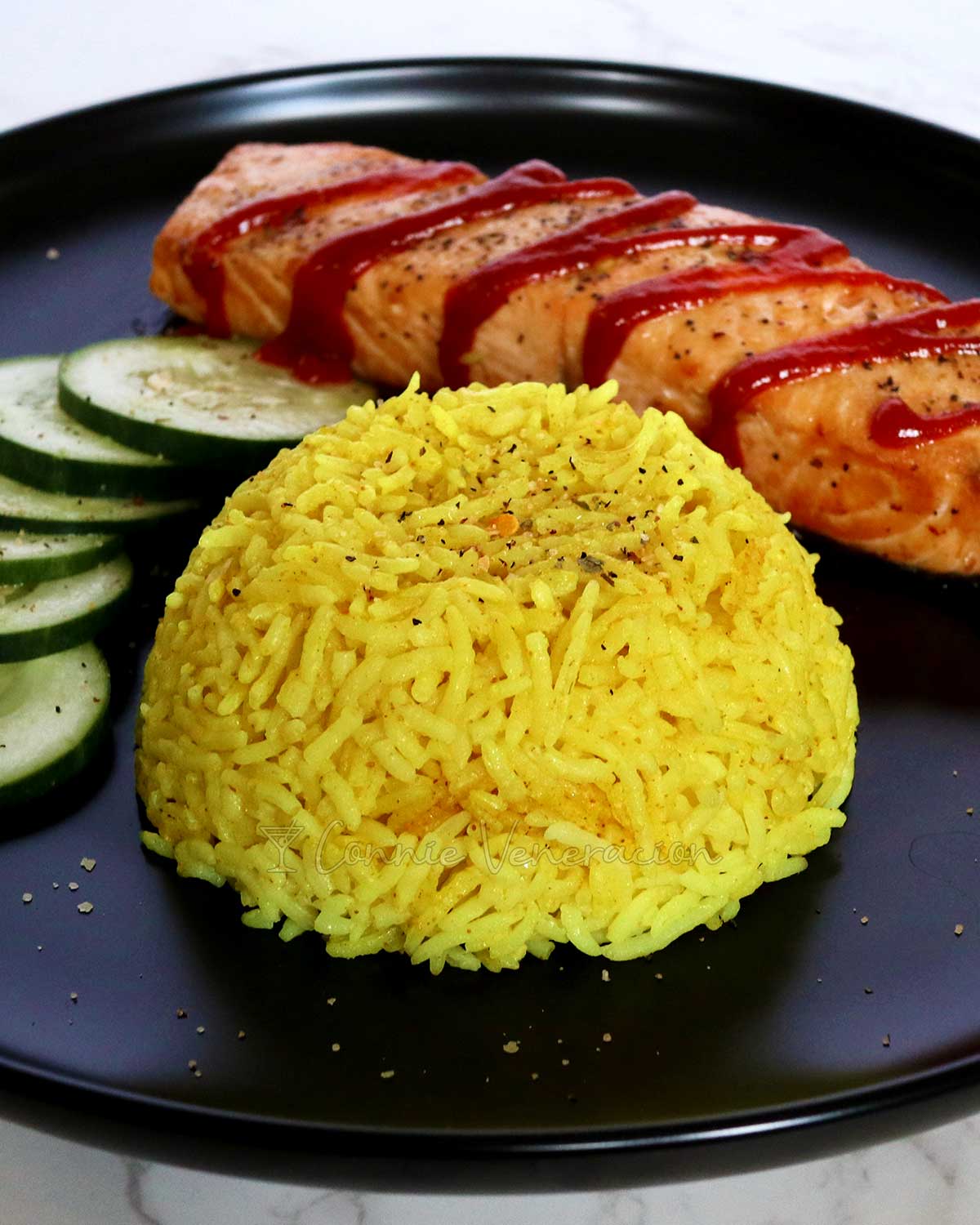
Indonesian Yellow Rice, also known as Nasi Kuning, is a traditional Indonesian dish that is commonly served during special occasions and celebrations. It is a fragrant and flavorful rice dish that gets its vibrant yellow color from turmeric, a commonly used spice in Indonesian cuisine.
To make Nasi Kuning, the rice is cooked with a mixture of ingredients that include turmeric, coconut milk, and various aromatics such as lemongrass, galangal, and bay leaves. The combination of these ingredients gives the rice a rich and aromatic flavor that pairs well with a variety of Indonesian dishes.
One important element of Indonesian Yellow Rice is the way it is presented. It is often served in a cone shape, known as “tumpeng,” which is considered to be a symbol of celebration and thanksgiving in Indonesian culture. The cone-shaped rice is usually surrounded by a variety of side dishes, such as fried chicken, spicy tempeh, hard-boiled eggs, and a selection of fresh vegetables.
Recipe for Indonesian Yellow Rice:

- Ingredients:
- 2 cups of jasmine rice
- 1 can of coconut milk
- 2 teaspoons of turmeric powder
- 2 stalks of lemongrass, bruised
- 2 slices of galangal
- 3 kaffir lime leaves
- 1 bay leaf
- 1 teaspoon of salt
- 1 teaspoon of sugar
Tip: Rinse the rice several times until the water runs clear to remove excess starch.
| Steps | Instructions |
|---|---|
| 1 | In a medium-sized pot, combine the coconut milk, turmeric powder, lemongrass, galangal, kaffir lime leaves, bay leaf, salt, and sugar. Bring to a simmer over medium heat. |
| 2 | Add the rinsed jasmine rice to the pot and stir to combine. Cover with a tight-fitting lid and reduce the heat to low. Cook for about 15-20 minutes or until the rice is cooked and the liquid is absorbed. |
| 3 | Remove the pot from the heat and let it sit, covered, for a few minutes to allow the rice to steam and become fluffy. |
| 4 | Fluff the rice with a fork and remove the lemongrass stalks, galangal, kaffir lime leaves, and bay leaf before serving. |
Note: Nasi Kuning is often served in a cone shape, but it can also be served in a regular mound on a platter or in individual portions.
Aromatic Indonesian Yellow Rice: Traditional Recipe (Nasi Kuning)
To make Indonesian Yellow Rice, start by rinsing the rice thoroughly and soaking it in water for about 30 minutes. Drain the rice and set it aside. In a pot, heat some oil and sauté finely chopped shallots and garlic until they become fragrant. Add in turmeric powder, ground coriander, ground cumin, and bay leaves, and stir well. Next, add the soaked rice and stir until it is evenly coated with the spice mixture. Pour in coconut milk, water, and a pinch of salt. Bring the mixture to a boil, then reduce the heat and let it simmer until the rice is cooked and all the liquid has been absorbed.
Ingredients:
- 2 cups of jasmine rice
- 3 cups of water
- 1 cup of coconut milk
- 2 shallots, finely chopped
- 3 cloves of garlic, finely chopped
- 1 teaspoon of ground turmeric
- 1 teaspoon of ground coriander
- 1/2 teaspoon of ground cumin
- 2 bay leaves
- A pinch of salt
To serve the Indonesian Yellow Rice, shape it into a cone or mound on a serving plate. Traditionally, it is garnished with fried shallots, sliced cucumber, and hard-boiled eggs. The vibrant color and aromatic flavor of Nasi Kuning make it a favorite dish for festive occasions such as weddings or religious celebrations in Indonesia. It can be enjoyed on its own or paired with various side dishes, such as chicken or beef rendang, fried chicken, or spicy sambal.
Origin and Cultural Significance
Indonesian Yellow Rice is typically served during important traditional ceremonies and celebrations, such as weddings, religious festivals, and other significant events. It is often considered a symbol of good luck and prosperity, and its vibrant yellow color is believed to represent brightness, joy, and positivity.
- Origins: Indonesian Yellow Rice has its origins in Javanese cuisine, which is one of the major culinary traditions in Indonesia. It is believed to have been influenced by Indian and Middle Eastern cuisines, as well as local ingredients and spices.
- Cultural Significance: The significance of Indonesian Yellow Rice goes beyond its taste and appearance. It is a dish that brings people together, symbolizing unity and togetherness. It is often served as part of a larger feast, where families and friends gather to celebrate and share a meal.
- Preparation and Ingredients: Indonesian Yellow Rice is made by cooking jasmine rice with turmeric, coconut milk, and a variety of aromatic herbs and spices. These include lemongrass, bay leaves, galangal, and kaffir lime leaves, which give the rice its distinct flavor and fragrance.
Indonesian Yellow Rice is a true representation of the diverse and vibrant Indonesian culture. Its origins in Javanese cuisine and its cultural significance make it a beloved dish throughout the country.
Ingredients and Preparation
To make Indonesian Yellow Rice, you will need the following ingredients:
- 2 cups of jasmine rice
- 1 cup of coconut milk
- 1 ½ cups of water
- 1 turmeric root (about 2 inches), peeled and grated
- 2 shallots, finely chopped
- 2 cloves of garlic, minced
- 1 teaspoon of salt
- 1 pandan leaf, tied into a knot (optional, but adds a nice aroma)
To prepare the Indonesian Yellow Rice, follow these steps:
- Rinse the jasmine rice with water until the water runs clear. Drain the excess water.
- In a pot, heat the coconut milk and water over medium heat. Add the grated turmeric, shallots, garlic, salt, and pandan leaf (if using) to the pot. Stir well to combine.
- Add the rinsed jasmine rice to the pot and stir to coat the rice with the coconut milk mixture.
- Bring the mixture to a boil, then reduce the heat to low and cover the pot. Let the rice simmer for about 15-20 minutes, or until the rice is cooked and the liquid has been absorbed.
- Once the rice is cooked, remove the pot from the heat and let it sit, covered, for 5 minutes.
- Fluff the rice with a fork before serving. Remove the pandan leaf (if used) before serving.
Note: Indonesian Yellow Rice is often served with various toppings and side dishes, such as fried chicken, fried eggs, shredded omelette, sliced cucumber, and krupuk (Indonesian crackers). It is a versatile dish that can be enjoyed on its own or as part of a larger meal.
Flavor Profile and Serving Suggestions
To enhance the flavor profile of Nasi Kuning, it is common to serve it with a variety of side dishes and condiments. Some popular choices include fried chicken, beef rendang, boiled eggs, sambal oelek (a spicy chili sauce), and krupuk (Indonesian shrimp crackers). These accompaniments not only provide additional flavors and textures, but they also complement the rice and create a well-rounded meal.
| Ingredients | Serving Suggestions |
|---|---|
|
|
Note: Nasi Kuning is best served fresh and warm. It can be enjoyed as a main dish or as a side dish to complement other Indonesian dishes.


