
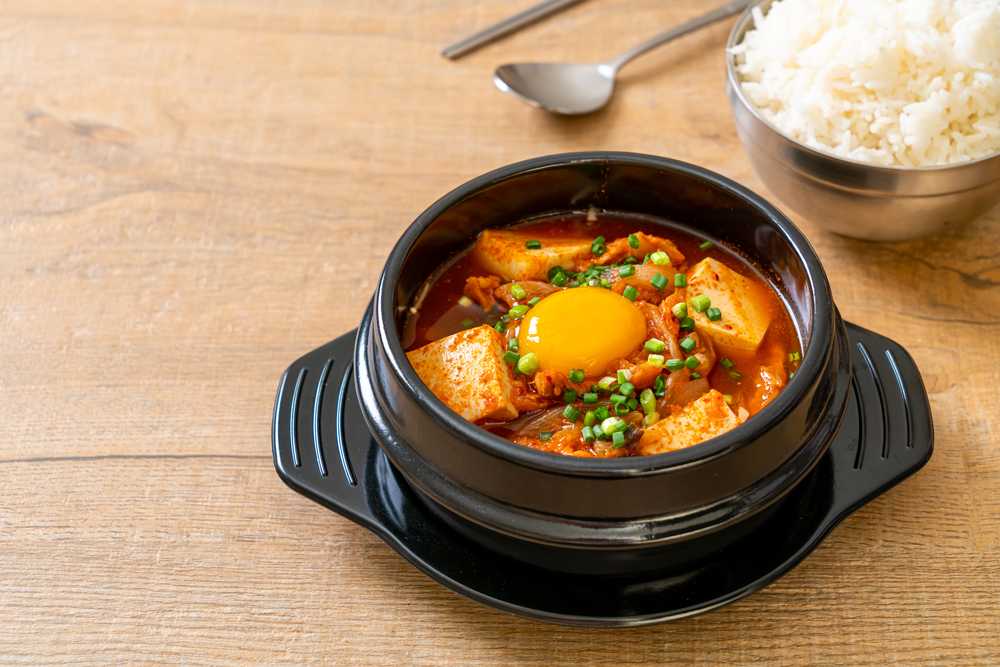
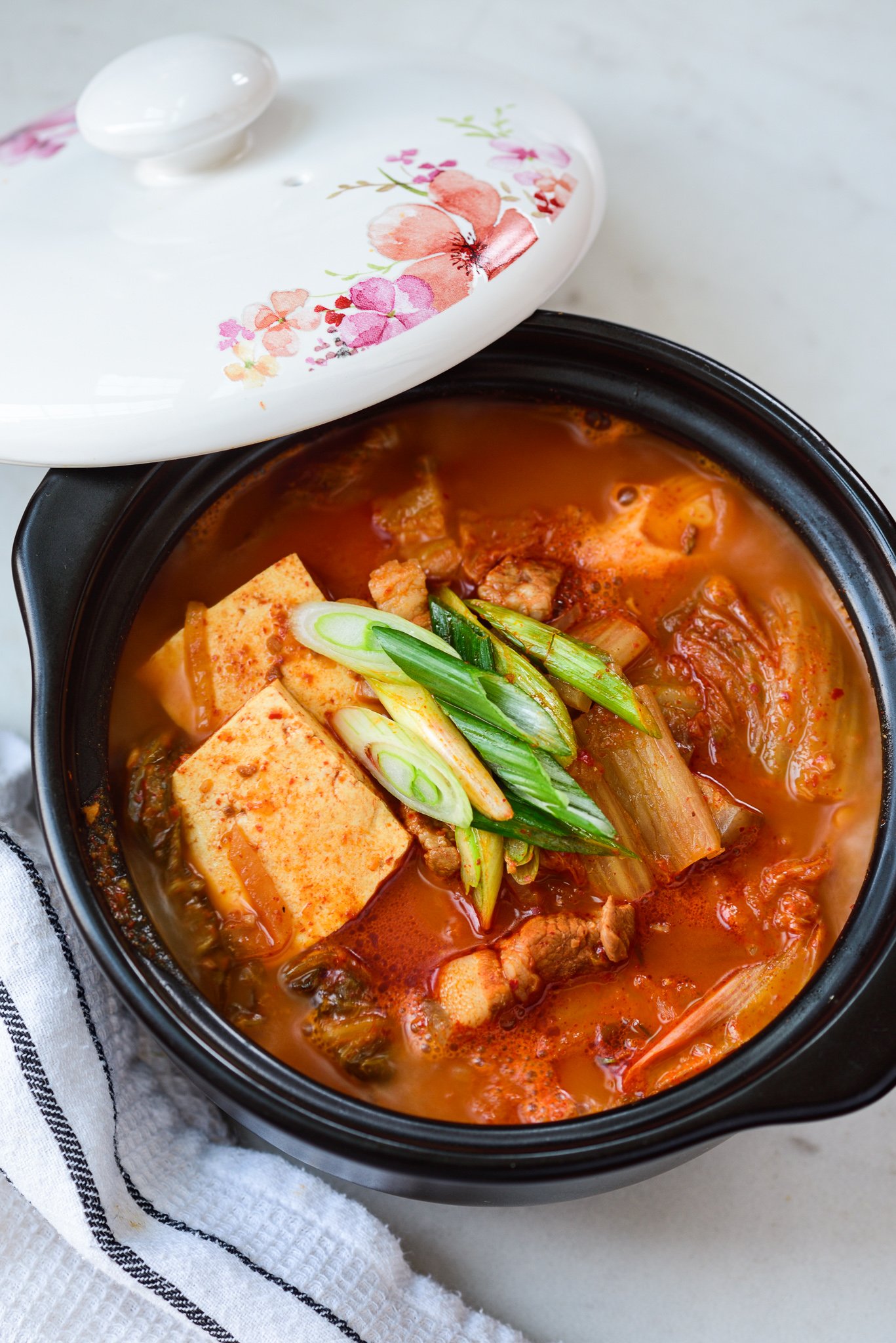
Korean Kimchi Soup, also known as “Kimchi Jjigae”, is a traditional Korean dish that is loved for its rich and spicy flavors. It is a hot and comforting soup that is made with fermented cabbage, called Kimchi, and a variety of other ingredients.
Kimchi is a staple in Korean cuisine and is made by fermenting vegetables with a variety of seasonings, such as chili pepper flakes, garlic, ginger, and fish sauce. It is known for its tangy and spicy taste, and it is packed with probiotics and vitamins. Kimchi Jjigae is a popular way to use leftover kimchi.
The soup is typically made with kimchi, pork or beef, tofu, and a range of vegetables, such as onions, mushrooms, and green onions. It is seasoned with soy sauce, garlic, and chili pepper flakes, which give it a deep and fiery flavor. The soup is often served with a bowl of steamed rice and a spread of banchan, which are small side dishes that complement the flavors of the soup.
What is Kimchi Soup?
Kimchi soup can be made with different types of kimchi, such as cabbage kimchi or radish kimchi, depending on personal preference. The soup is typically cooked with pork or other types of meat, such as beef or seafood, to add flavor and protein. Vegetables like tofu, mushrooms, and onions are also commonly added to enhance the taste and texture of the soup.
Interestingly, kimchi soup is often enjoyed with a bowl of steamed rice on the side. This is because the rich and spicy flavors of the soup pair well with the plainness of the rice, creating a balanced and satisfying meal. Kimchi soup is also known for its health benefits, as kimchi is a fermented food that contains probiotics and is rich in vitamins and minerals.
If you’re interested in trying kimchi soup, you can find it at Korean restaurants or try making it at home using a recipe that suits your taste preferences. It’s a flavorful and nourishing dish that is sure to warm you up on a cold day.
The Health Benefits of Kimchi Soup

Kimchi soup, a traditional Korean dish, offers a range of health benefits due to its combination of ingredients and fermentation process.:
Gut Health: Kimchi soup is made with fermented cabbage and other vegetables that are rich in probiotics. Probiotics are beneficial bacteria that can help improve digestion and promote a healthy gut. Consuming kimchi soup regularly can contribute to a balanced gut microbiome, which has been linked to improved immune function, reduced inflammation, and enhanced overall well-being.
Weight Management: Kimchi soup is low in calories and high in fiber, making it a great option for those looking to manage their weight. The fiber content in kimchi soup helps to promote feelings of fullness and can prevent overeating. Additionally, the fermentation process of kimchi enhances its nutritional value and can potentially aid in digestion and metabolism.
Other potential health benefits of kimchi soup include:
- Improved immune function: The combination of garlic, ginger, and chili peppers in kimchi soup may help enhance the body’s immune response due to their antimicrobial and anti-inflammatory properties.
- Cancer prevention: Some studies suggest that the active compounds found in kimchi, such as sulforaphane and flavonoids, may have anticancer properties and could potentially help reduce the risk of certain types of cancer.
- Heart health: The antioxidants present in kimchi soup, including vitamins A and C, may help reduce the risk of heart disease by preventing oxidative stress and inflammation in the body.
To fully experience the health benefits of kimchi soup, it is important to choose homemade or traditionally fermented varieties. Store-bought versions may contain added sugars and preservatives that can diminish the nutritional value. Additionally, kimchi soup can be enjoyed as a standalone dish or paired with other Korean delicacies, such as rice or noodles, to make it a more substantial meal.
How to Make Kimchi Soup at Home
Ingredients:
- 2 cups of kimchi
- 1 cup of sliced tofu
- 1 cup of sliced mushrooms
- 1/2 cup of sliced onion
- 1/2 cup of sliced green onions
- 3 cloves of minced garlic
- 2 teaspoons of soy sauce
- 1 teaspoon of sesame oil
- 4 cups of vegetable or chicken broth
- Salt and pepper to taste
Instructions:
- Heat a pot over medium heat and add the sesame oil. Sauté the minced garlic, onion, and mushrooms until they are softened.
- Add the kimchi and continue to cook for a few more minutes. This will help to enhance the flavors of the kimchi.
- Pour in the vegetable or chicken broth and bring it to a boil. Reduce the heat to low and let it simmer for about 15-20 minutes.
- Add the sliced tofu and soy sauce to the soup. Cook for an additional 5 minutes.
- Season with salt and pepper to taste.
- Serve the kimchi soup hot, garnished with sliced green onions.
This homemade kimchi soup is a comforting and satisfying dish that can be enjoyed as a main course or as a side dish. The combination of tangy kimchi, savory broth, and tender tofu makes it a delightful and nutrient-rich meal option. Give this recipe a try and experience the authentic flavors of Korean cuisine in the comfort of your own home.
Serving Suggestions and Variations
Serving Suggestions:
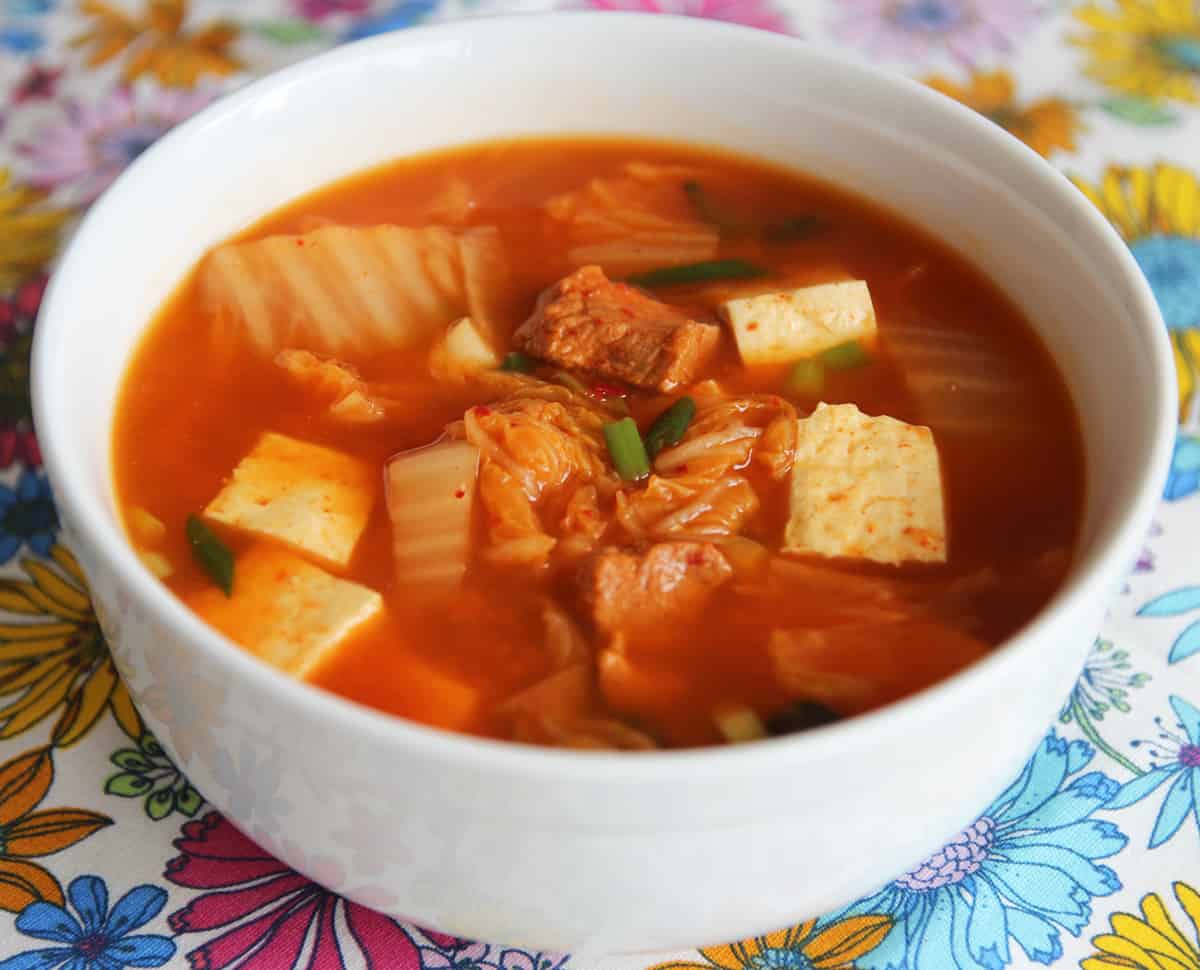
- Traditionally, kimchi soup is served with a bowl of steamed rice on the side. The rice can be mixed into the soup or eaten separately.
- For added flavor and texture, garnish the soup with chopped scallions, cilantro, or toasted sesame seeds.
- Serve the soup hot in individual bowls, allowing each person to season their own bowl with soy sauce or fish sauce according to their taste.
Variations:
- Tofu Kimchi Soup: Add cubes of firm tofu to the soup for a vegetarian or vegan version. The tofu will soak up the flavors of the kimchi and enhance the overall taste.
- Seafood Kimchi Soup: Add seafood such as shrimp, clams, or mussels to the soup for a hearty and briny twist. This variation adds a delicious seafood flavor to the soup.
- Pork Kimchi Soup: If you prefer a meaty option, add slices of pork belly or pork shoulder to the soup. The pork adds richness and depth to the dish.
- Spicy Kimchi Soup: For those who enjoy a kick of spice, add gochujang (Korean red chili paste) or chili flakes to the soup. This variation will give the soup an extra spicy and robust flavor.
Experiment with these serving suggestions and variations to create your own version of kimchi soup that suits your taste buds. Whether you prefer it classic and simple or want to spice things up, kimchi soup is a delicious and comforting dish that can be enjoyed all year round.


